


Is Scrolling Social Media Hurting Your Job Performance?
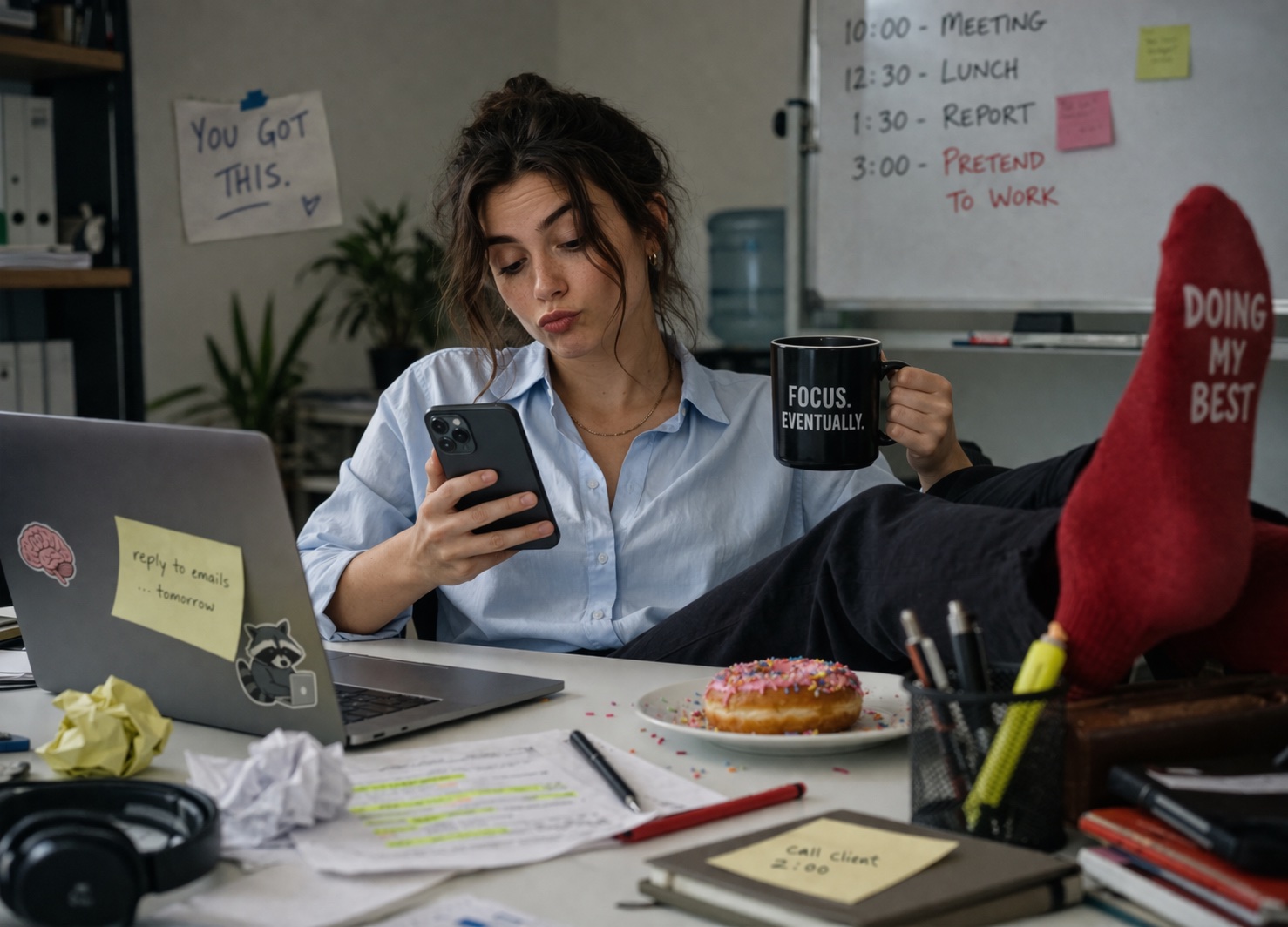
Is Scrolling Social Media Hurting Your Job Performance?
A quick scroll on Facebook, a glance at X between emails, or a few minutes on Instagram before returning to work may seem harmless. For many employees, it feels like a minor break in the day. In reality, repeated social media use during working hours can quietly undermine concentration, productivity, judgment, and the overall quality of work.
The problem is not limited to lost minutes. The larger issue is what social media does to attention. These platforms are built around novelty, quick reactions, and constant switching. That design can make it harder to return to focused work, especially when a role requires concentration, accuracy, and sustained mental effort.
The Real Cost of Social Media at Work
Many people assume workplace social media use is only a time-management problem. That is too narrow. A person may spend only a few minutes checking a platform, but the interruption often lingers after the phone is put away or the tab is closed. Attention becomes fragmented, tasks feel harder to re-enter, and the mind stays slightly divided between work and whatever was just consumed online.
This is where job performance begins to suffer. Employees may still appear busy and may still complete their responsibilities, but they often do so with less depth, less care, and less efficiency. Over time, that can mean slower execution, weaker focus, more mistakes, and work that feels more mentally draining than it should.
How Social Media Affects Work Performance
Social media platforms reward speed, reaction, and emotional stimulation. Professional work usually demands the opposite. Most jobs require patience, clear thinking, careful reading, and the ability to stay with one task long enough to do it properly. When a person frequently interrupts that process with social media, the brain gets used to faster rewards and shorter bursts of attention.
That shift has practical consequences. Routine tasks can start to feel unusually dull. Mentally demanding work may be avoided or delayed. Employees may reread the same material, lose their train of thought more often, or find it harder to settle into serious work. In that sense, social media distractions at work do more than waste time. They can reduce a person’s tolerance for normal cognitive effort.
Why Social Media Distractions at Work Can Lower Productivity
Even brief interruptions carry a cost. Every time concentration is broken, there is a reset period before a person returns to full focus. When that happens repeatedly through the day, output often becomes slower and less accurate. The damage is not always dramatic, which is why it is easy to miss. Instead, it shows up in small but costly ways: procrastination, missed details, weaker judgment, shorter attention span, and more mental fatigue by midday.
This matters even more in roles that involve writing, administration, scheduling, operations, finance, client communication, project management, compliance, or analysis. In these fields, accuracy and consistency matter. A distracted mind increases the chance of error, weakens decision-making, and makes preventable mistakes more likely.
Social Media, Mood, and Professional Presence
Social media can also affect how a person feels at work. Comparison, outrage, conflict, and attention-seeking behaviour are built into many online spaces. Even when people think they are unaffected, repeated exposure can shape mood, patience, and mental clarity. Someone may become more irritable, more scattered, or less emotionally steady without immediately connecting that shift to their online habits.
There is also a professional image issue. Colleagues and managers notice when someone seems distracted, mentally absent, or slow to engage. They may not know the cause, but they see the result. In many workplaces, reputation is shaped not only by output, but also by consistency, responsiveness, and professional presence.
Why the Impact Builds Over Time
One of the biggest mistakes people make is assuming social media only becomes a problem when usage is extreme. In practice, moderate but repeated distraction can still cause meaningful damage because the effect compounds. A few interruptions per day can turn into dozens each week and hundreds each month. That adds up to a large amount of broken attention over time.
The result may be lower productivity, less initiative, more fatigue, and a workday that feels heavier than it should. Employees often describe themselves as unmotivated or mentally drained when part of the issue is that their attention has been trained to expect constant stimulation.
What Employers Should Understand
For employers, this is not a moral issue. It is a performance issue. Social media platforms are designed to capture attention, and attention is one of the most important resources employees bring to work. Companies that want better performance should take that seriously.
That does not mean overreacting with surveillance or lectures. It means creating a work environment that protects focus. Clear expectations around deep work, fewer unnecessary interruptions, and more thoughtful boundaries around phone use can all support better concentration and stronger results.
What Employees Can Do to Reduce Social Media Distraction
Employees do not need a dramatic digital detox to improve work performance. In many cases, a few practical adjustments can make a noticeable difference. Avoiding social media between tasks, removing apps from work devices, scheduling breaks instead of checking randomly, and noticing which tasks trigger the urge to scroll can all help rebuild stronger focus.
The goal is not perfection. It is control. People who manage their attention more deliberately usually think more clearly, make fewer mistakes, and produce better work.
Final Thought
If you are wondering whether scrolling social media is hurting your job performance, the answer is that it often does, even when the habit looks minor on the surface. The effect is usually cumulative rather than dramatic. It weakens concentration, reduces productivity, and makes high-quality work harder to sustain.
In a workplace culture full of distractions, the ability to protect attention has become a real professional advantage. Employees who do that well are often the ones who work more effectively, communicate more clearly, and build stronger long-term credibility.