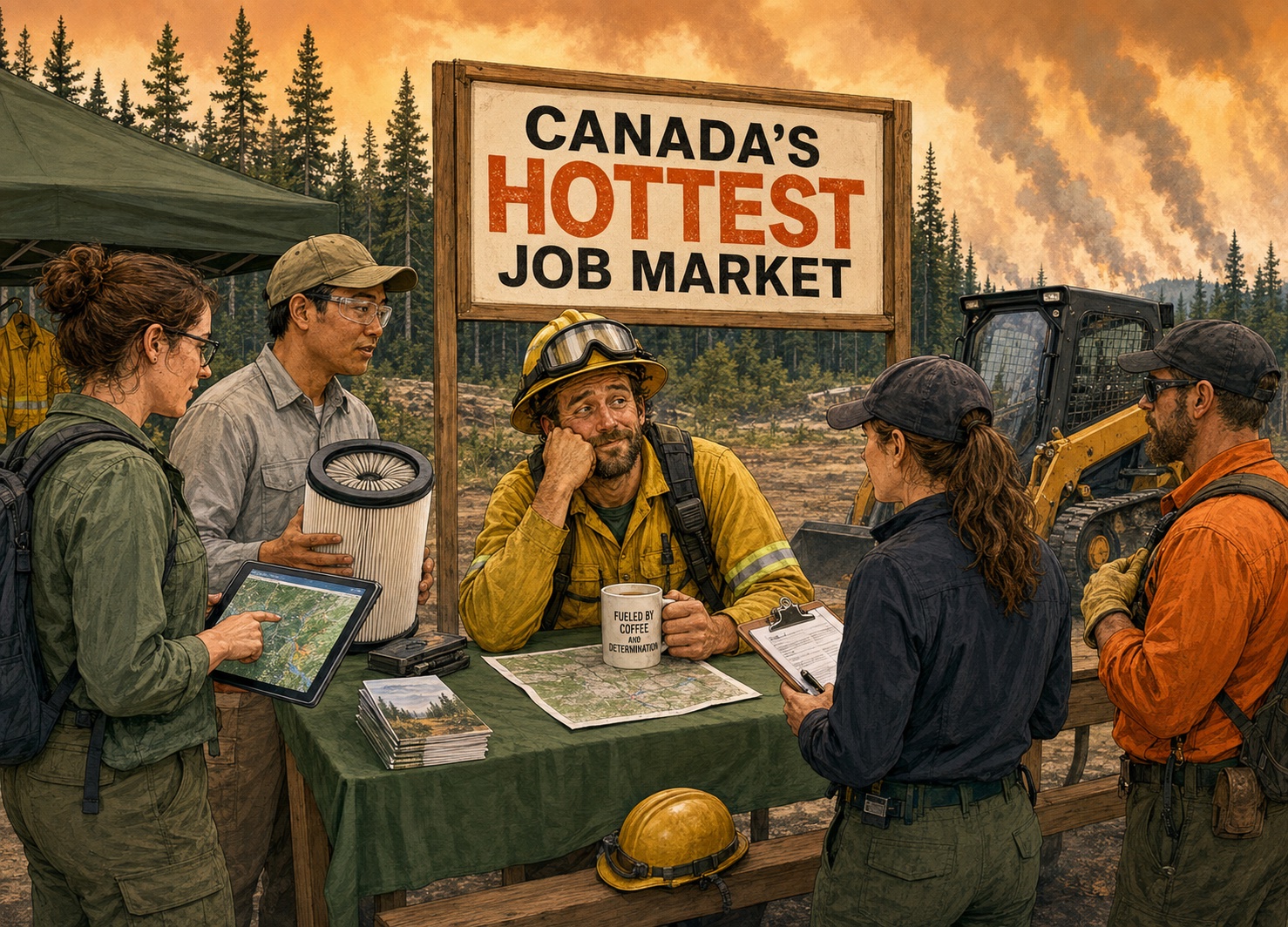


Canada’s Summer Job Market Is Stabilizing, but Students Still Face a Tough Search
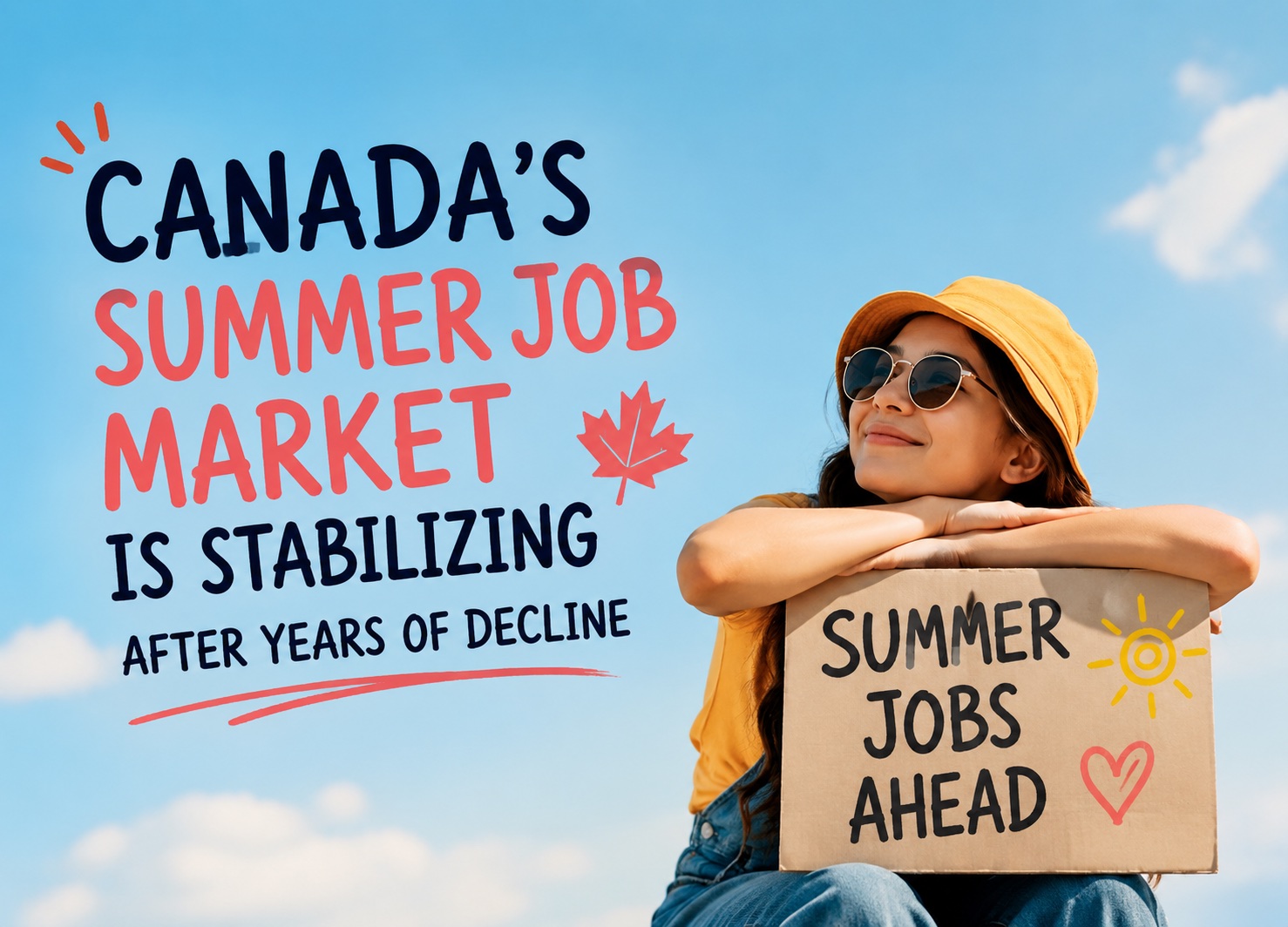
Canada’s Summer Job Market Is Stabilizing, but Students Still Face a Tough Search
According to a recent Indeed analysis reported by HRD Canada, Canadian summer job postings were up 4% year over year as of May 8, 2026. That marks a break from the steady decline seen between 2022 and 2025.
However, the improvement needs to be read carefully. Summer job postings remain 37% below their 2022 peak. In plain terms, the market has stopped falling, but it has not fully recovered.
For students, recent graduates, and young workers looking for seasonal employment, that distinction matters.
Stabilization Is Not the Same as Strength
The main takeaway from the report is that Canada’s summer job market is no longer deteriorating at the same pace. Seasonal job postings are tracking close to 2025 levels, and the share of overall Canadian job postings that include “summer” in the title is roughly flat compared with previous years.
That is better than another year of sharp decline. But it is not a boom.
Indeed senior economist Brendon Bernard described the situation clearly: given the weak starting point, the youth labour market needs a rebound, not just stability.
This is the key issue for job seekers. A market that has stabilized after falling sharply can still feel difficult on the ground. There may be postings available, but competition can remain high, hiring can be selective, and many candidates may need to apply more broadly than they expected.
Summer Camps Are Still Important, but the Mix Is Changing
Summer camps remain one of the largest sources of seasonal employment in Canada. However, their share of seasonal postings has slipped. Camp counsellor, lead, and manager roles accounted for 13% of summer job postings in early May 2026, down from 15% at the same time in 2025.
At the same time, the report points to stronger seasonal demand in other areas, including:
- painting
- warehouse work
- administrative assistant roles
- youth and community care positions
For job seekers, this matters because the summer job market is not one single market. A student who only searches for camp jobs, retail jobs, or lifeguard roles may miss opportunities in other areas where demand is holding up better.
A practical summer job search in 2026 should be wider than usual. Candidates should look at seasonal, part-time, temporary, contract, administrative, recreation, customer service, labour, logistics, municipal, and community-service roles.
Youth Employment Remains Weak
The broader youth employment picture remains difficult. Statistics Canada reported that the unemployment rate among youth aged 15 to 24 reached 14.7% in September 2025, the highest September rate since 2010, excluding the pandemic year of 2020.
The pressure has been especially high for teenagers. In the third quarter of 2025, the unemployment rate for youth aged 15 to 19 reached 20.8%, compared with 12.6% in the same period in 2022.
Returning students also faced a difficult summer in 2025. Their unemployment rate averaged 17.9% from May to August, the highest summer level since 2009, excluding 2020. Student labour force participation was also at a record low in both summer 2024 and summer 2025.
That context helps explain why a small improvement in summer postings may not feel like relief to many students. The market is no longer sliding, but many young people are still competing from a weaker position than they were in 2022.
What This Means for Students and Young Workers
For students, the 2026 summer job market calls for a more deliberate job search. Waiting until school ends and applying casually to a few obvious employers is unlikely to be enough for many candidates.
1. Apply Earlier
Many employers start hiring for summer roles before the summer begins. Students who wait until June may be entering after many seasonal positions have already been filled.
2. Apply Across Job Categories
Do not search only for “summer student” or “camp counsellor.” Use broader terms such as “seasonal,” “temporary,” “part-time,” “student,” “assistant,” “labourer,” “warehouse,” “customer service,” “recreation,” and “administrative.”
3. Treat Basic Jobs as Resume Builders
A summer job does not need to be glamorous to be useful. Customer service, food service, warehouse, camp, landscaping, municipal, retail, and administrative roles can all demonstrate reliability, communication, teamwork, safety awareness, punctuality, and work ethic.
4. Customize the Resume
A generic student resume is usually weak. Employers need to see availability, relevant skills, certifications, volunteer work, school projects, customer-facing experience, and any previous work history clearly.
5. Follow Up Professionally
In a competitive market, a short follow-up email or in-person check-in can help, especially for small businesses, camps, recreation centres, local services, and seasonal employers.
What Employers Should Understand
Employers also need to read the market correctly. A weaker youth labour market does not automatically mean every employer can hire easily. Many young candidates are applying broadly, but employers may still struggle to find applicants with the right availability, transportation, certifications, communication skills, or willingness to work specific shifts.
For employers hiring students, clear postings matter. A useful summer job posting should state:
- start and end dates
- expected hours
- wage range
- required certifications
- whether training is provided
- physical requirements
- weekend or evening expectations
- whether students are encouraged to apply
Vague postings lose candidates. So do slow hiring processes. Students often apply to many jobs at once, and employers who delay decisions may lose suitable applicants to faster-moving competitors.
The Bottom Line
Canada’s summer job market appears to be stabilizing after 3 years of decline, but the recovery remains incomplete. Job postings are slightly higher than last year, yet still far below the 2022 peak. Youth unemployment remains elevated, and many students are still facing a crowded and uneven market.
For job seekers, the answer is not panic. It is strategy. Apply early, apply broadly, tailor the resume, and treat every role as a chance to build employability.
For employers, the message is also clear: young workers are available, but hiring them still requires speed, clarity, and realistic expectations.
The summer job market has stopped getting worse. Now it needs to get better.