

Abandon Modern Recruitment: Bring Back What Actually Worked
Abandon Modern Recruitment: Bring Back What Actually Worked
When Hiring Happened in a Day
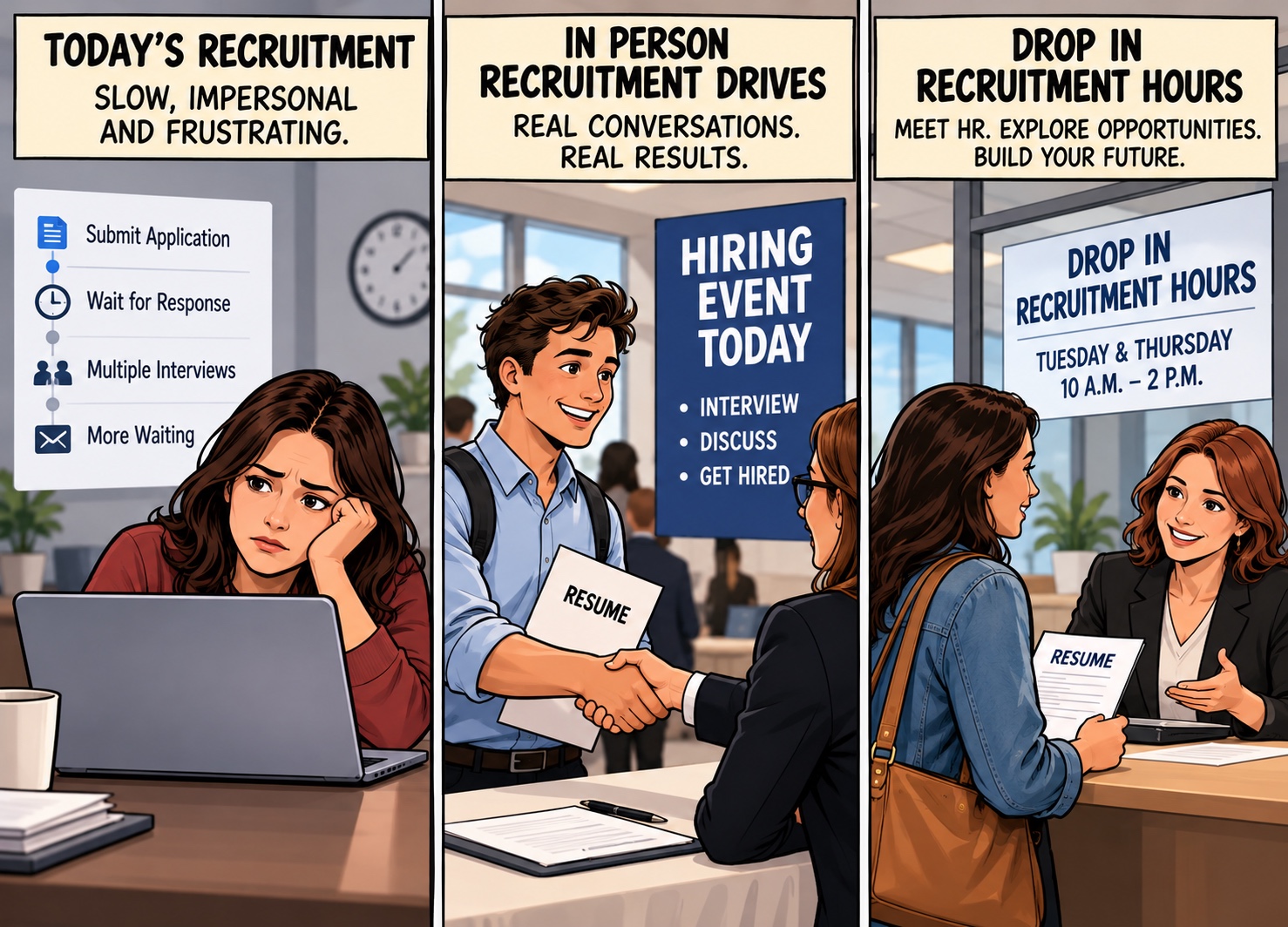
I recall working for a company that regularly held in person recruitment drives. Events were advertised, and interested candidates simply showed up with their resumes, ready to meet potential employers.
Recruiters conducted brief interviews and sorted candidates into three categories: yes, maybe, and no.
Promising applicants immediately progressed to additional interviews, sometimes receiving employment offers that same day.
What now takes weeks could often be accomplished in hours.
The process was efficient, economical, and respectful of everyone’s time. Most importantly, it brought employers and candidates together without unnecessary bureaucracy.
Where Is the Accountability?
Today, applicants frequently wait weeks for an initial response, followed by multiple interviews and lengthy periods of uncertainty.
Meanwhile, qualified candidates lose interest, accept competing offers, or simply move on.
Why is this acceptable?
Recruitment performance should be a measurable component of every responsible HR professional’s and hiring manager’s performance evaluation.
Time to first contact, time to interview, time to fill, and candidate withdrawal rates should be monitored. Where appropriate, compensation and performance incentives should reflect recruitment effectiveness and hiring quality.
Organizations measure productivity, sales, and operational efficiency. Recruitment should be no exception.
Bring Back Recruitment Drives and Drop In Hours
Imagine organizations regularly advertising recruitment days where candidates could meet hiring managers, interview, and potentially receive offers during a single event.
These events could attract applicants sufficiently interested to make the effort to attend, while employers could assess qualifications, communication skills, and enthusiasm firsthand.
Another approach would be scheduled drop in recruitment hours. For example, candidates could visit every Tuesday and Thursday between 10 a.m. and 2 p.m., submit their resumes, and speak directly with HR.
Recruiters would build candidate pools while applicants gained an opportunity to experience the workplace, meet employees, and develop genuine interest in the organization.
That personal connection is difficult to replicate through an online application.
Put People Back Into Recruitment
Recruitment should not be an endless exchange between applicants and automated systems.
Technology has its place, but it should accelerate hiring rather than create additional barriers.
Face to face conversations allow employers to recognize qualities that resumes cannot always communicate. They also allow candidates to evaluate employers beyond carefully crafted job descriptions.
Speed matters. Human interaction matters. Accountability matters.
Perhaps the future of recruitment is not another sophisticated platform or automated screening tool.
Perhaps it is bringing back the straightforward practices we should never have abandoned.